How To Convert Ira To Physical Gold – Everything You Need to Know in 2026

A Gold IRA is a specialized retirement account that allows you to hold physical precious metals. Unlike traditional IRAs that contain paper assets, a Gold IRA holds actual gold, silver, platinum, or palladium.

The account follows the same tax rules as conventional IRAs. You get similar contribution limits and distribution requirements. The main difference lies in what you’re allowed to hold inside the account.

These accounts are also called precious metals IRAs or self-directed IRAs. They give investors a way to diversify beyond stocks and bonds. Many people use them as a hedge against economic uncertainty.

The IRS has strict regulations about what metals qualify. Not all gold products can go into these accounts. The rules exist to ensure quality and prevent fraud.

Table of Contents show

Why Investors Choose Gold IRAs

Protection Against Inflation

Gold has historically maintained its purchasing power over time. When paper currency loses value, gold often rises. This makes it an attractive option during periods of high inflation.

The metal has been a store of value for thousands of years. While currencies come and go, gold remains constant. This enduring quality appeals to conservative investors.

During the 1970s inflation crisis, gold prices soared. More recently, concerns about government spending have driven interest in precious metals. Many investors see gold as insurance against currency devaluation.

Portfolio Diversification

Financial advisors often recommend diversifying across different asset classes. Gold typically moves independently from stocks and bonds. When equity markets fall, gold sometimes rises.

This negative correlation can smooth out portfolio volatility. A diversified portfolio may weather market storms better. Gold adds a layer of protection that paper assets cannot provide.

Most experts suggest allocating 5-10% of your portfolio to precious metals. This provides diversification benefits without overexposure. The exact percentage depends on your risk tolerance and goals.

Economic Uncertainty Hedge

Gold shines during times of crisis. When geopolitical tensions rise, investors flock to safe havens. Gold is considered one of the safest assets available.

During banking crises, stock market crashes, or political upheaval, gold often performs well. It’s tangible and has no counterparty risk. You own the physical metal outright.

The 2008 financial crisis demonstrated this principle. While stocks plummeted, gold prices climbed steadily. Investors who held gold cushioned their losses significantly.

Types of Gold IRAs

Traditional Gold IRA

This account uses pre-tax dollars for contributions. You get a tax deduction in the year you contribute. The money grows tax-deferred until retirement.

When you take distributions, you pay ordinary income tax. This works well if you expect to be in a lower tax bracket during retirement. Most employer-sponsored plans follow this structure.

Contribution limits match standard IRA limits. For 2024, that’s 7,000 for those under 50. Those 50 and older can contribute 8,000.

Roth Gold IRA

Roth accounts use after-tax dollars. You don’t get an immediate tax deduction. However, qualified withdrawals are completely tax-free.

This benefits people who expect higher tax rates in retirement. Your gold can grow and be withdrawn without tax consequences. There are no required minimum distributions during your lifetime.

Income limits may restrict your ability to contribute directly. High earners might need to use a backdoor Roth strategy. The same contribution limits apply as traditional IRAs.

SEP Gold IRA

Self-employed individuals and small business owners can use SEP IRAs. These allow much higher contribution limits. For 2024, you can contribute up to 25% of compensation or $69,000.

SEP IRAs follow traditional IRA tax treatment. Contributions are tax-deductible, and withdrawals are taxed. They’re easier to set up than 401(k) plans.

Only employers can contribute to SEP IRAs. If you have employees, you must contribute equally for everyone. This makes them most suitable for solo entrepreneurs.

Eligible Precious Metals for Gold IRAs

Gold Requirements

The IRS requires gold to be 99.5% pure or higher. This ensures you’re holding investment-grade metal. Most gold coins and bars meet this standard.

American Gold Eagles are an exception. They’re only 91.67% pure but still qualify. This special exemption exists because they’re government-minted.

Popular eligible gold coins include Canadian Maple Leafs, Austrian Philharmonics, and Australian Kangaroos. Gold bars from approved refiners also qualify. The metal must be produced by an accredited manufacturer.

Silver, Platinum, and Palladium

Silver must be 99.9% pure to qualify. Common options include American Silver Eagles and Canadian Silver Maple Leafs. Silver provides a more affordable entry point than gold.

Platinum and palladium must both be 99.95% pure. These metals are rarer than gold and silver. Their prices can be more volatile due to industrial demand.

Platinum coins like the American Platinum Eagle qualify. Palladium options include Canadian Palladium Maple Leafs. Bars from approved refiners work for all metals.

Prohibited Items

Collectible coins don’t qualify for Gold IRAs. The IRS specifically excludes rare numismatic pieces. Your account must hold bullion, not collectibles.

You cannot hold jewelry or other fabricated items. The metal must be in coin or bar form. Pre-1933 gold coins are generally prohibited.

Coins graded for condition typically don’t qualify. The focus must be on metal content, not rarity. Stick with standard bullion products to ensure compliance.

How to Set Up a Gold IRA

Choose a Custodian

You cannot hold IRA assets yourself. The IRS requires an approved custodian. These specialized companies handle the paperwork and reporting.

Look for custodians experienced with precious metals. Not all IRA custodians offer gold options. Check their fee structure carefully before committing.

The custodian manages your account but doesn’t sell metals. They work with approved dealers and depositories. Make sure they have a solid reputation and good customer service.

Select a Precious Metals Dealer

You’ll need to buy metals from an approved dealer. The custodian typically provides a list of options. Choose a dealer with transparent pricing and good reviews.

Dealers should clearly disclose their markups. Compare prices from multiple sources. Lower premiums mean more metal for your money.

Reputable dealers will only sell IRS-approved products. They should be knowledgeable about Gold IRA regulations. Ask questions about their experience and business practices.

Find an Approved Depository

Your precious metals must be stored in an IRS-approved facility. You cannot keep them at home. The depository must meet strict security standards.

Most depositories offer segregated or non-segregated storage. Segregated storage keeps your metals separate from others. Non-segregated storage pools metals together but tracks your ownership.

Segregated storage costs more but provides additional peace of mind. Your specific coins and bars are identified and stored separately. Consider your comfort level when choosing storage options.

Fund Your Account

You can fund a Gold IRA several ways. Direct contributions work like any IRA. You simply write a check up to the annual limit.

Rollovers from existing retirement accounts are common. You can transfer funds from a 401(k) or traditional IRA. This allows you to move larger amounts into precious metals.

Direct rollovers avoid tax consequences. The money moves from one custodian to another. Indirect rollovers give you 60 days to complete the transfer.

Gold IRA Costs and Fees

Setup Fees

Most custodians charge a one-time setup fee. This covers account establishment and paperwork. Fees typically range from 50 to 300.

Some companies waive setup fees for larger accounts. Ask about promotions or minimum investment requirements. Read the fine print to understand what’s included.

Annual Maintenance Fees

Custodians charge annual fees for account administration. These cover record-keeping, reporting, and customer service. Expect to pay 75 to 300 per year.

Some custodians use flat fees regardless of account size. Others charge based on account value. Flat fees benefit investors with larger accounts.

Storage Fees

Depositories charge for storing your precious metals. Fees vary based on storage type and account value. Annual storage costs range from 100 to 300.

Segregated storage costs more than non-segregated. Some depositories charge a percentage of account value. Others use flat fees based on space used.

Transaction Fees

Buying and selling metals may incur transaction fees. Custodians might charge 40 to 100 per transaction. Some include a certain number of free transactions annually.

Dealers also build premiums into their prices. This is their profit margin above spot price. Premiums vary based on product type and market conditions.

Seller Markups

When buying metals, you’ll pay above spot price. This markup covers the dealer’s costs and profit. Premiums range from 3% to 10% or more.

Popular coins like American Eagles carry higher premiums. Generic rounds and bars typically cost less. Shop around to find competitive pricing.

When selling, you’ll receive below spot price. The dealer needs margin to resell the metal. This buy-sell spread is how dealers make money.

Gold IRA Rules and Regulations

Contribution Limits

Gold IRAs follow standard IRA contribution limits. For 2024, the limit is 7,000 for those under 50. Those 50 and older can contribute 8,000.

These limits apply across all your IRAs combined. You can’t contribute 7,000 to a Gold IRA and another 7,000 to a traditional IRA. The limit is total across all accounts.

SEP and SIMPLE IRAs have different, higher limits. Check current IRS guidelines for specific amounts. Limits typically increase with inflation adjustments.

Required Minimum Distributions

Traditional Gold IRAs require minimum distributions starting at age 73. The IRS mandates you withdraw a certain percentage annually. This ensures they eventually collect taxes.

Calculating RMDs for Gold IRAs can be complex. You may need to liquidate some metals to meet requirements. Plan ahead to avoid forced sales at unfavorable prices.

Roth Gold IRAs have no RMDs during the owner’s lifetime. This provides more flexibility in retirement. Beneficiaries will face RMD requirements after inheritance.

Early Withdrawal Penalties

Withdrawing before age 59½ typically incurs a 10% penalty. You’ll also owe income tax on traditional IRA distributions. This double hit makes early withdrawals expensive.

Some exceptions exist for hardship situations. First-time home purchases, education expenses, and medical bills may qualify. Check IRS rules carefully before taking early distributions.

Roth IRAs allow withdrawal of contributions anytime without penalty. However, earnings face the same restrictions as traditional IRAs. The five-year rule also applies to Roth accounts.

Prohibited Transactions

You cannot personally possess IRA metals. Taking physical possession counts as a distribution. This triggers taxes and potential penalties.

You can’t buy metals from yourself or sell to yourself. Transactions must be at arm’s length. Using IRA assets for personal benefit is strictly prohibited.

Don’t use your IRA to buy metals for family members. The IRS has strict rules about disqualified persons. Violations can disqualify your entire IRA.

Advantages of Gold IRAs

Tangible Asset Ownership

Gold is a physical asset you can see and touch. It’s not a promise or digital entry. This tangibility provides psychological comfort for many investors.

Unlike stocks or bonds, gold can’t go bankrupt. There’s no counterparty risk involved. The metal has intrinsic value recognized worldwide.

Physical gold has survived every financial system in history. Paper currencies have come and gone. This permanence appeals to long-term thinkers.

Tax Advantages

Gold IRAs offer the same tax benefits as traditional retirement accounts. Traditional accounts provide immediate tax deductions. Roth accounts offer tax-free growth and withdrawals.

These tax advantages can significantly boost long-term returns. Compounding without tax drag accelerates wealth building. The tax savings often outweigh the additional fees.

Holding gold outside an IRA means paying capital gains tax. The collectibles rate of 28% applies to physical gold. IRA treatment can save substantial taxes over time.

Portfolio Insurance

Gold acts as insurance for your retirement portfolio. When other assets struggle, gold often holds value. This protective quality justifies the additional costs for many investors.

The insurance analogy is apt. You pay premiums (fees) for protection. If disaster strikes, the coverage pays off. Even if markets remain calm, you have peace of mind.

Historical data shows gold’s protective qualities. During major market crashes, gold typically performs well. This makes it valuable for risk management.

Inflation Protection

Gold has maintained purchasing power across centuries. An ounce of gold bought a fine suit in Roman times. It still buys a fine suit today.

As governments print money, currency values decline. Gold supply grows slowly and predictably. This scarcity helps preserve value over time.

Recent inflation concerns have renewed interest in gold. When consumer prices rise rapidly, gold often follows. This makes it a practical inflation hedge.

Disadvantages and Risks

Higher Fees

Gold IRAs cost more than conventional retirement accounts. Setup fees, storage fees, and custodian fees add up. These expenses reduce your overall returns.

A typical stock IRA might cost 50 annually. A Gold IRA could cost 300 to $500 or more. Over decades, these fees compound negatively.

You need gold to appreciate enough to overcome these costs. In stable markets, the fees might outweigh benefits. Consider whether the protection justifies the expense.

No Income Generation

Gold doesn’t pay dividends or interest. It just sits in storage. Your returns depend entirely on price appreciation.

Stocks and bonds generate income while you hold them. This income can be reinvested for compound growth. Gold provides no such benefit.

For retirees seeking income, gold has limitations. You must sell metal to generate cash flow. This gradually depletes your holdings.

Price Volatility

Gold prices can swing dramatically. While it protects against some risks, it creates others. Short-term volatility can be unsettling.

Gold hit 1,900 in 2011, then fell to 1,050 by 2015. Investors who bought high suffered significant losses. Timing matters with precious metals.

Long-term holders generally fare better. Short-term traders often struggle with gold’s unpredictability. Patience is essential for precious metals investing.

Liquidity Considerations

Selling physical gold takes time. You can’t instantly liquidate like stocks. The process involves coordination between custodian, dealer, and depository.

During market stress, premiums can spike. You might face wider buy-sell spreads. This reduces the net proceeds from sales.

Required minimum distributions require advance planning. You may need to sell metals months before needing the cash. This reduces flexibility compared to traditional IRAs.

Storage and Security Concerns

Your gold sits in a third-party facility. You’re trusting the depository’s security. While rare, theft or fraud could occur.

Most depositories carry insurance, but verify coverage. Understand what’s protected and what isn’t. Read the fine print on storage agreements.

Some investors dislike not having direct access. The inability to hold your gold feels wrong to them. This psychological factor matters for some people.

Gold IRA vs. Physical Gold Ownership

Tax Treatment Differences

IRA gold grows tax-deferred or tax-free. Physical gold held personally faces capital gains tax. The 28% collectibles rate applies to profits.

This tax difference significantly impacts returns. Over decades, tax-deferred growth compounds powerfully. The IRA structure provides clear advantages here.

However, IRAs have distribution requirements. Physical gold has no such restrictions. You can hold it indefinitely without forced sales.

Accessibility and Control

Physical gold in your possession offers immediate access. You can view it, hold it, or sell it anytime. This control appeals to many investors.

IRA gold requires going through custodians and dealers. The process takes days or weeks. You sacrifice convenience for tax benefits.

Some investors split their holdings. They keep some gold personally and some in an IRA. This balances accessibility with tax advantages.

Cost Comparisons

Personal gold ownership has lower ongoing costs. You pay premiums when buying, but no annual fees. Storage at home is free, though risky.

Gold IRAs have annual fees that never end. These costs persist even if gold prices fall. The fee structure favors larger accounts.

For small amounts, personal ownership might cost less. For larger retirement savings, IRA tax benefits often win. Run the numbers for your situation.

How to Choose the Right Gold IRA

Assess Your Investment Goals

Define what you want from a Gold IRA. Are you seeking inflation protection? Portfolio diversification? Crisis insurance?

Your goals determine appropriate allocation. Conservative investors might choose 5% in gold. More aggressive hedgers might go to 15% or 20%.

Consider your time horizon. Gold works best as a long-term hold. Short-term traders often struggle with precious metals.

Evaluate Your Risk Tolerance

Gold adds different risks than stocks or bonds. Price volatility can be substantial. Make sure you can handle the swings.

Some investors sleep better with gold in their portfolio. Others find the volatility stressful. Know yourself before committing.

Don’t invest more than you can afford to leave untouched. Gold IRAs work best when you’re not forced to sell. Emergency funds should be in liquid accounts.

Compare Custodians and Dealers

Research multiple custodians before choosing. Compare fee structures carefully. Small differences compound over decades.

Read customer reviews and check ratings. Look for complaints with regulatory agencies. A custodian’s reputation matters enormously.

Interview potential dealers about their processes. Ask about buyback policies and pricing. Transparent dealers will answer questions directly.

Understand All Costs

Request complete fee schedules in writing. Watch for hidden charges or escalating fees. Some companies advertise low fees but have expensive add-ons.

Calculate total annual costs for your expected account size. Include setup, maintenance, storage, and transaction fees. Compare total costs across providers.

Ask about fee increases. Some companies raise fees after the first year. Lock in rates when possible or choose providers with stable pricing.

Common Gold IRA Mistakes to Avoid

Choosing Based on Price Alone

The cheapest option isn’t always the best. Low fees might come with poor service. Balance cost against quality and reputation.

Some companies offer promotions to attract customers. They may raise fees later or provide subpar service. Look at long-term value, not just initial costs.

Reputation and reliability matter more than saving $50 annually. A problematic custodian can cost you far more. Do thorough research before deciding.

Overallocating to Gold

Gold should be part of a diversified portfolio. Putting everything in precious metals is risky. Most experts recommend 5-15% maximum.

Gold doesn’t generate income or grow businesses. Over-reliance limits your portfolio’s growth potential. Balance protection with growth assets.

Younger investors especially need growth assets. Gold is better suited for preservation than accumulation. Adjust your allocation based on age and goals.

Ignoring Fees

Small fees seem insignificant initially. Over 20-30 years, they dramatically impact returns. A 1% annual fee can cost hundreds of thousands.

Calculate the long-term impact of fees. Compare this to potential benefits. Make sure the math works in your favor.

Some investors focus only on metal prices. They ignore the erosion from fees. Total return after fees is what matters.

Failing to Diversify Within Precious Metals

Don’t put all your precious metals allocation in gold. Consider silver, platinum, or palladium too. Different metals perform differently.

Silver offers more growth potential but higher volatility. Platinum has industrial uses that affect pricing. Diversification within metals reduces risk.

Most investors should emphasize gold but include others. A 70-30 or 80-20 split between gold and other metals works well. This provides diversification benefits.

Not Planning for RMDs

Required minimum distributions can force unwanted sales. Plan ahead for these mandatory withdrawals. Consider how you’ll meet RMD requirements.

Some investors convert to Roth IRAs before RMDs begin. This eliminates future distribution requirements. The upfront tax cost may be worth it.

Keep some liquid assets for RMDs. Don’t put 100% of retirement funds in gold. Maintain flexibility for required distributions.

The Future of Gold IRAs

Growing Popularity

Gold IRA interest has increased significantly. Economic uncertainty drives demand. More investors seek alternatives to traditional assets.

Younger investors are discovering precious metals. They see the same benefits their grandparents did. The appeal of gold transcends generations.

As awareness grows, the industry is maturing. More providers offer competitive options. This benefits consumers through better pricing and service.

Regulatory Environment

The IRS continues refining Gold IRA regulations. Rules may tighten or loosen over time. Stay informed about regulatory changes.

Congress occasionally proposes retirement account reforms. These could affect Gold IRAs positively or negatively. Monitor legislative developments.

Industry self-regulation is improving. Professional associations set standards for members. This helps protect consumers from bad actors.

Technology Integration

Digital platforms are simplifying Gold IRA management. Online dashboards provide real-time account access. Technology makes precious metals investing more accessible.

Some companies offer apps for account monitoring. You can track metal prices and account value easily. This transparency benefits investors.

Blockchain technology may eventually impact the industry. Digital certificates could supplement physical storage. Innovation continues in precious metals investing.

Final Thoughts

Gold IRAs offer a unique way to diversify retirement savings. They provide protection against inflation and economic uncertainty. The tangible nature of precious metals appeals to many investors.

However, they’re not right for everyone. Higher fees and lack of income generation are real drawbacks. Carefully weigh advantages against disadvantages.

Education is essential before investing. Understand the rules, costs, and risks thoroughly. Don’t rush into a Gold IRA without proper research.

Work with reputable providers who prioritize transparency. Avoid high-pressure sales tactics and unrealistic promises. Take time to compare options carefully.

A Gold IRA can be a valuable portfolio component. When used appropriately, it provides diversification and security. Make sure it aligns with your overall financial strategy.

Consider consulting a financial advisor familiar with precious metals. They can help determine appropriate allocation. Professional guidance often prevents costly mistakes.

Remember that gold is a long-term investment. Short-term price movements shouldn’t drive decisions. Patience and perspective are essential for success.

Whether you choose a Gold IRA depends on your unique situation. Assess your goals, risk tolerance, and financial position. Make an informed decision that supports your retirement objectives.


>> Check out our top recommendation here

How To Convert Ira To Physical Gold – Everything You Need to Know in 2026

A Gold IRA, also known as a precious metals IRA, is a specialized type of Individual Retirement Account that allows investors to hold physical gold and other approved precious metals as part of their retirement portfolio. Unlike traditional IRAs that typically contain paper assets such as stocks, bonds, and mutual funds, a Gold IRA provides the opportunity to diversify retirement savings with tangible assets that have maintained value throughout human history. Chances are you were looking for – How To Convert Ira To Physical Gold, but you need to know this first.

Gold IRAs operate under the same tax-advantaged structure as conventional IRAs, meaning contributions may be tax-deductible, and the assets grow tax-deferred until withdrawal during retirement. This investment vehicle has gained significant popularity among investors seeking to protect their retirement savings from economic uncertainty, inflation, and market volatility.

The concept of including precious metals in retirement accounts became possible through the Taxpayer Relief Act of 1997, which expanded the types of assets permissible in IRAs. Since then, Gold IRAs have become an increasingly important tool for retirement planning, particularly for those who value portfolio diversification and wealth preservation.

Types of Gold IRAs

Traditional Gold IRA

A Traditional Gold IRA functions similarly to a standard traditional IRA but holds physical precious metals instead of paper assets. Contributions to a Traditional Gold IRA may be tax-deductible depending on your income level and whether you’re covered by an employer-sponsored retirement plan. The assets within the account grow tax-deferred, and you’ll pay ordinary income taxes on distributions taken during retirement. Required Minimum Distributions (RMDs) typically begin at age 73, following current IRS regulations.

Roth Gold IRA

A Roth Gold IRA is funded with after-tax dollars, meaning contributions are not tax-deductible in the year they’re made. However, the significant advantage is that qualified distributions during retirement are completely tax-free, including all growth and appreciation of your precious metals holdings. Roth Gold IRAs do not have required minimum distributions during the account holder’s lifetime, providing greater flexibility in retirement planning.

SEP Gold IRA

A Simplified Employee Pension (SEP) Gold IRA is designed for self-employed individuals and small business owners. SEP IRAs allow for higher contribution limits compared to traditional and Roth IRAs, making them an attractive option for those with higher incomes who want to maximize their retirement savings in precious metals. Employers make contributions on behalf of eligible employees, and these contributions are tax-deductible as a business expense.

Eligible Precious Metals for Gold IRAs

The IRS maintains strict standards regarding which precious metals can be held in a Gold IRA. These requirements ensure that only high-quality, investment-grade metals are included in retirement accounts.

Gold Requirements

Gold products must meet a minimum fineness requirement of .995 purity (99.5% pure). Acceptable gold products include certain bullion bars and coins from approved refiners and government mints. American Gold Eagle coins are an exception to the purity rule and are permitted despite being 91.67% pure due to their status as official U.S. legal tender.

Silver Requirements

Silver must meet a minimum fineness of .999 (99.9% pure). Approved silver products include various bullion bars and coins that meet IRS specifications.

Platinum and Palladium Requirements

Both platinum and palladium must meet a minimum fineness of .9995 (99.95% pure). These metals provide additional diversification options within a precious metals IRA.

Prohibited Items

Collectible coins, rare numismatic coins, and jewelry are generally not permitted in Gold IRAs. The IRS specifically prohibits items valued primarily for their collectibility rather than their precious metal content. Additionally, certain commemorative coins and limited mintage items may not qualify, even if they meet purity standards.

How Gold IRAs Work

The Self-Directed IRA Structure

Gold IRAs are structured as self-directed IRAs, which means the account holder has greater control over investment decisions compared to traditional IRAs managed by financial institutions. While you direct the investments, you’ll still work with several specialized service providers to maintain IRS compliance.

Required Service Providers

Custodian: An IRS-approved custodian must hold legal ownership of the IRA assets on your behalf. The custodian handles all administrative tasks, maintains records, files required reports with the IRS, and ensures compliance with regulations. Not all IRA custodians handle precious metals, so you’ll need to work with one specializing in Gold IRAs.

Dealer: A precious metals dealer sources and sells the gold and other precious metals for your IRA. The dealer should offer IRA-eligible products and work seamlessly with custodians to facilitate purchases.

Depository: IRS regulations require that precious metals in an IRA be stored in an approved depository facility. You cannot store IRA-owned gold at home or in a personal safe deposit box. The depository provides secure, insured storage and maintains detailed records of your holdings.

Funding Your Gold IRA

There are several methods to fund a Gold IRA:

Direct Contributions: You can make annual contributions up to the IRS limit, which adjusts periodically for inflation. These contributions can be made with cash that the custodian then uses to purchase precious metals on your behalf.

Transfers: You can transfer funds from one IRA to another without tax consequences. The money moves directly between custodians without you taking possession of the funds.

Rollovers: You can roll over funds from qualified retirement accounts such as 401(k)s, 403(b)s, or traditional IRAs into a Gold IRA. Rollovers must be completed within 60 days to avoid taxes and penalties, though direct rollovers (trustee-to-trustee transfers) are generally recommended to avoid complications.

Benefits of Gold IRA Investing

Inflation Protection

Gold has historically served as a hedge against inflation. As the purchasing power of currency decreases over time, gold typically maintains or increases its value. During periods of high inflation, gold often outperforms traditional paper assets, helping preserve the real value of retirement savings.

Portfolio Diversification

Modern portfolio theory emphasizes the importance of diversification across different asset classes. Gold and other precious metals often have a low or negative correlation with stocks and bonds, meaning they may perform well when traditional investments struggle. This diversification can reduce overall portfolio volatility and risk.

Economic Uncertainty Protection

During times of economic turmoil, political instability, or financial market stress, gold frequently serves as a “safe haven” asset. Investors flock to gold during crises, often driving up its value when other investments are declining. This characteristic makes gold an important component of a defensive investment strategy.

Tangible Asset Ownership

Unlike stocks or bonds, which represent claims on company assets or debt obligations, gold is a physical asset with intrinsic value. This tangibility provides psychological comfort to many investors who appreciate owning something real rather than paper promises.

Long-Term Value Preservation

Gold has maintained its value across centuries and civilizations. While short-term prices fluctuate, gold’s long-term track record as a store of value is unmatched. This makes it particularly suitable for retirement planning, which requires a long-term perspective.

Tax Advantages

Gold IRAs offer the same tax benefits as traditional retirement accounts. Depending on the type of Gold IRA you choose, you can enjoy tax-deductible contributions, tax-deferred growth, or tax-free distributions in retirement.

How To Convert Ira To Physical Gold – Some Considerations

Costs and Fees

Gold IRAs typically involve higher costs than traditional IRAs. You’ll encounter setup fees, annual custodial fees, storage fees charged by the depository, and transaction fees when buying or selling metals. Additionally, precious metals dealers charge premiums over the spot price of metals. These costs can accumulate over time and impact overall returns.

However, they are totally worth it in the long run if you consider the ROI.

No Passive Income

Unlike dividend-paying stocks or interest-bearing bonds, gold does not generate income while you hold it. The only way to profit from gold is through price appreciation. This means your Gold IRA won’t benefit from the compounding effect of reinvested dividends or interest payments.

Price Volatility

While gold is often viewed as a stable store of value over the long term, short-term prices can be quite volatile. Gold prices are influenced by numerous factors including currency fluctuations, interest rates, geopolitical events, and investor sentiment. This volatility can be unsettling for some investors.

Liquidity Considerations

While gold is generally considered a liquid asset, selling physical gold from an IRA involves more steps than selling stocks or mutual funds. You must coordinate with your custodian and dealer, and the process may take several days. Additionally, you’ll need to find a buyer willing to pay a fair price.

Storage Limitations

IRS regulations prohibit storing IRA-owned gold at home. All precious metals must remain in an approved depository until you take a distribution. This requirement means you cannot directly access or enjoy your gold holdings while they’re in the IRA.

Required Minimum Distributions

For Traditional Gold IRAs, you must begin taking required minimum distributions at age 73. This means you’ll need to either sell some of your precious metals or take physical possession of them (which counts as a taxable distribution). The need to liquidate holdings to satisfy RMDs can be problematic if gold prices are depressed at that time.

Setting Up a Gold IRA: Step-by-Step Process

Step 1: Research and Education

Before opening a Gold IRA, invest time in understanding how these accounts work, the costs involved, and whether they align with your retirement goals. Consider consulting with a financial advisor who understands precious metals investing.

Step 2: Choose a Custodian

Select an IRS-approved custodian that specializes in precious metals IRAs. Compare fee structures, customer service reputations, and the range of services offered. The custodian will be your primary point of contact for account administration.

Step 3: Complete Account Application

Fill out the necessary paperwork to establish your Gold IRA. This process is similar to opening any other IRA and requires personal information, beneficiary designations, and investment objectives.

Step 4: Fund Your Account

Decide how you’ll fund the account-through contributions, transfers, or rollovers. If rolling over funds from an existing retirement account, work closely with both custodians to ensure a smooth, tax-free transfer.

Step 5: Select Your Precious Metals

Once your account is funded, work with your dealer to select IRA-eligible precious metals. Consider diversifying across different types of metals and products to maximize the benefits of precious metals ownership.

Step 6: Complete the Purchase

Your custodian will use funds from your IRA to purchase the selected metals from the dealer. The metals are then shipped directly to the approved depository, where they’ll be stored in your account.

Step 7: Ongoing Management

Monitor your account statements, track the value of your holdings, and rebalance as needed. Stay informed about precious metals markets and consider whether adjustments to your allocation are appropriate as you approach retirement.

Gold IRA Distribution Options

Taking Physical Possession

When you reach retirement age and want to access your Gold IRA assets, you can take physical possession of your precious metals. This counts as a taxable distribution (for Traditional Gold IRAs), and you’ll pay ordinary income taxes on the value of the metals received. The metals will be shipped from the depository to your address.

Selling for Cash

Alternatively, you can instruct your custodian to sell your precious metals and distribute the cash proceeds. This option provides liquidity and may be preferable if you need funds for living expenses rather than physical gold.

In-Kind Distribution

Some investors choose to take partial distributions of physical metals while leaving the remainder in the account. This strategy allows you to enjoy some of your gold holdings while maintaining tax-deferred growth on the balance.

Gold IRA Rules and Regulations

Contribution Limits

Gold IRAs are subject to the same annual contribution limits as traditional IRAs. These limits are adjusted periodically by the IRS to account for inflation. For 2024, individuals under 50 can contribute up to 7,000 annually, while those 50 and older can contribute up to 8,000 with the catch-up contribution.

Prohibited Transactions

The IRS prohibits certain transactions in Gold IRAs to prevent self-dealing and maintain the retirement purpose of these accounts. You cannot:

  • Store IRA-owned gold at home or in a personal safe deposit box
  • Use IRA gold as collateral for a loan
  • Sell personal precious metals to your IRA
  • Purchase metals from your IRA for personal use without taking a distribution

Violating these rules can result in the entire IRA being considered distributed, triggering immediate taxes and potential penalties.

Early Withdrawal Penalties

Distributions taken before age 59½ are generally subject to a 10% early withdrawal penalty in addition to ordinary income taxes. Certain exceptions exist, including disability, first-time home purchases (up to $10,000), and qualified education expenses.

Factors Affecting Gold Prices

Understanding what drives gold prices can help you make informed decisions about your Gold IRA investments.

Economic Indicators

Gold prices often respond to economic data such as inflation rates, GDP growth, and employment figures. Weak economic data typically supports gold prices as investors seek safe-haven assets.

Interest Rates

There’s generally an inverse relationship between interest rates and gold prices. When interest rates rise, the opportunity cost of holding non-yielding gold increases, potentially pressuring prices downward. Conversely, low interest rates make gold more attractive.

Currency Fluctuations

Gold is priced in U.S. dollars, so the strength or weakness of the dollar significantly impacts gold prices. A weaker dollar typically supports higher gold prices, while a stronger dollar can pressure prices lower.

Geopolitical Events

Political instability, conflicts, and international tensions often drive investors toward gold as a safe-haven asset, supporting prices during uncertain times.

Supply and Demand

Like any commodity, gold prices are influenced by supply from mining operations and demand from various sectors including jewelry, technology, and investment. Changes in mining output or demand from major consumers like China and India can affect prices.

Is a Gold IRA Right for You?

Ideal Candidates for Gold IRAs

Gold IRAs may be particularly suitable for:

  • Investors seeking portfolio diversification beyond traditional stocks and bonds
  • Those concerned about inflation eroding retirement savings
  • Individuals with a long investment time horizon who can weather short-term volatility
  • Investors who have already maximized contributions to other retirement accounts
  • Those with a portion of their portfolio they can dedicate to alternative investments without compromising their overall financial security

When a Gold IRA Might Not Be Appropriate

Gold IRAs may not be the best choice for:

  • Younger investors who can benefit more from the growth potential of stocks
  • Those with limited retirement savings who cannot afford the higher fees
  • Investors seeking regular income from their retirement accounts
  • Individuals who need maximum liquidity and flexibility
  • Those uncomfortable with commodity price volatility

Allocation Considerations

Financial experts generally recommend limiting precious metals to 5-10% of a diversified retirement portfolio. This allocation provides the benefits of gold ownership while maintaining sufficient exposure to growth-oriented assets. Your specific allocation should depend on your age, risk tolerance, retirement timeline, and overall financial situation.

Conclusion

Gold IRAs represent a unique opportunity to diversify retirement portfolios with physical precious metals while maintaining the tax advantages of traditional retirement accounts. These specialized IRAs offer protection against inflation, economic uncertainty, and market volatility, making them an attractive option for many retirement savers.

However, Gold IRAs are not without considerations. Higher fees, lack of passive income, and storage requirements mean they’re not suitable for everyone. The decision to open a Gold IRA should be made carefully, considering your overall financial situation, retirement goals, and investment philosophy.

By understanding how Gold IRAs work, the benefits they offer, and the potential drawbacks, you can make an informed decision about whether including precious metals in your retirement portfolio aligns with your long-term financial objectives. Whether you’re looking to hedge against economic uncertainty, diversify your holdings, or preserve wealth across generations, a Gold IRA may be a valuable component of a comprehensive retirement strategy.

As with any significant financial decision, consider consulting with qualified financial and tax professionals who can provide personalized advice based on your unique circumstances. With proper planning and realistic expectations, a Gold IRA can serve as an important tool in building a secure and diversified retirement portfolio.

>> Check out our top recommendation here

How to Convert IRA to Physical Gold: Step-by-Step Guide for 2025

Looking to protect your retirement savings from economic uncertainty and wondering how to convert IRA to physical gold? Converting your IRA to physical gold might be the solution you’re seeking. This strategy allows investors to diversify their retirement portfolios with precious metals, creating a potential hedge against inflation.

A person sitting at a desk, surrounded by paperwork and a computer, making a phone call to a gold dealer while holding a document labeled "IRA Conversion."

Converting an IRA to physical gold involves setting up a self-directed IRA specifically designed to hold precious metals like gold, silver, platinum, and palladium. Unlike traditional retirement accounts that typically hold paper assets, a gold IRA contains actual physical bullion stored in an IRS-approved depository.

Many financial experts recommend investing in a gold IRA as part of a balanced retirement strategy. Gold has historically maintained value during times of market volatility, making it an attractive option for those concerned about preserving wealth. The process requires working with specialized custodians who understand IRS regulations regarding precious metals in retirement accounts.

Understanding Gold IRAs

A person sitting at a desk, surrounded by financial documents and a computer, researching how to convert their IRA to physical gold

Gold IRAs are specialized individual retirement accounts that allow investors to hold physical precious metals instead of traditional paper assets. These investment vehicles offer unique benefits for retirement planning while providing a tangible asset base.

Different Types of Gold IRAs

Traditional Gold IRAs function similarly to conventional IRAs but hold physical gold instead of stocks or bonds. Contributions are made with pre-tax dollars, and taxes are paid upon withdrawal during retirement.

Roth Gold IRAs require contributions with after-tax money, but qualified withdrawals during retirement are completely tax-free. This option works well for those expecting to be in a higher tax bracket after retiring.

SEP Gold IRAs are designed for self-employed individuals or small business owners. They follow similar tax rules as Traditional Gold IRAs but allow for higher contribution limits.

Self-directed IRAs (SDIRAs) give investors the most control over their precious metals investments. With an SDIRA, you can choose from a wider range of IRS-approved metals beyond just gold.

Benefits of Investing in a Gold IRA

Gold IRAs provide excellent portfolio diversification, reducing overall investment risk. When stocks and bonds decline, gold often maintains or increases in value.

Physical gold serves as a hedge against inflation by maintaining purchasing power when paper currency loses value. This protection is particularly valuable during economic uncertainty.

Gold has demonstrated long-term value preservation throughout history. Unlike paper assets that can become worthless, gold has maintained significance for thousands of years.

These accounts offer the same tax advantages as traditional retirement accounts while providing exposure to precious metals. This combination creates a balanced approach to retirement planning.

Tax Implications and Advantages

Gold IRAs provide tax-deferred growth potential, allowing investments to compound without annual tax burdens. For Traditional Gold IRAs, taxes are only paid upon withdrawal during retirement.

With Roth Gold IRAs, qualified withdrawals are completely tax-free after age 59½, provided the account has been open for at least five years. This benefit can significantly increase long-term returns.

Early withdrawals before age 59½ typically incur a 10% penalty plus regular income taxes. However, certain exceptions exist for first-time home purchases, higher education expenses, and specific hardships.

Contribution limits match those of standard IRAs ($6,500 in 2023, with $1,000 additional catch-up contributions for those 50+). Required Minimum Distributions (RMDs) apply to Traditional Gold IRAs but not to Roth versions.

How to Convert an IRA to Physical Gold

A person sitting at a desk, surrounded by paperwork and a computer, speaking on the phone while holding a gold bar and filling out forms

Converting your retirement account to physical gold requires following specific IRS guidelines and working with specialized custodians. This process protects your tax advantages while diversifying your portfolio with precious metals.

Choosing the Right Gold IRA Custodian

Finding a reputable gold IRA custodian is the first critical step in your conversion process. These specialized custodians must be approved by the IRS to handle physical precious metals in retirement accounts.

Look for custodians with strong reputations and transparent fee structures. Companies like Equity Trust, Kingdom Trust, and New Direction IRA have established track records in the gold IRA space.

When evaluating custodians, compare their:

  • Annual fees and storage costs
  • Minimum investment requirements
  • Customer service quality
  • Years in business
  • Available metals selection

Ask potential custodians about their storage facilities. IRS-approved depositories must meet strict security standards to house your physical gold properly.

Physical Gold vs. Other Precious Metals

While gold remains the most popular precious metal for IRAs, you have several IRA-eligible options:

Metal Characteristics Investment Considerations
Gold Historically stable, highly liquid Available as coins or bars (must be 99.5% pure)
Silver More affordable, industrial applications Higher volatility, requires more storage space
Platinum Rarer than gold, industrial demand Price can fluctuate with automotive industry
Palladium Industrial applications, limited supply Typically more volatile than gold

Canadian Maple Leaf coins, American Gold Eagles, and gold bars from approved refiners are popular IRA-eligible gold options.

Not all gold products qualify for IRAs. Collectible coins, jewelry, and gold below 99.5% purity are prohibited by IRS regulations.

The Rollover Process

The transfer process follows one of two methods: direct or indirect rollovers. Direct transfers move funds from your existing IRA custodian to your new gold IRA custodian without you handling the money.

For direct transfers:

  1. Open a self-directed IRA with your chosen gold custodian
  2. Complete transfer request forms
  3. Select your IRA-eligible gold products
  4. Your new custodian handles the transfer with your current provider

Indirect rollovers involve you receiving funds from your current IRA, then depositing them with your new gold custodian within 60 days. This method risks penalties if not completed within the timeframe.

Most experts recommend direct transfers to avoid potential tax complications. Once complete, your custodian arranges for the physical gold to be stored in an approved depository that meets IRS requirements.

Regulatory Considerations and Compliance

A person completing paperwork to convert IRA to physical gold, surrounded by financial documents and a safe full of gold bars

Converting your IRA to physical gold involves navigating specific regulations set by the IRS. You must follow these rules carefully to maintain the tax-advantaged status of your retirement account and avoid penalties.

IRS Regulations and Guidelines

The IRS has strict rules governing Gold IRAs. Physical gold in an IRA must be stored in an IRS-approved depository, not in your home or personal safe. This requirement exists to maintain the integrity of your retirement account.

Gold IRA custodians handle the administrative aspects of your account. They ensure your investment remains compliant with federal regulations. These custodians submit required reports to the IRS and manage the transfer or rollover process.

The IRS allows certain types of account transfers. Direct transfers between trustees typically avoid tax consequences. However, rollovers where you take possession of funds must be completed within 60 days to avoid penalties.

Investors should note that the IRS limits Gold IRA contributions to the same annual amounts as traditional IRAs.

Approved Gold Types and Purity Standards

The IRS only permits specific gold products in retirement accounts. These must meet minimum fineness requirements to qualify for IRA inclusion.

IRA-Approved Gold Products:

  • American Gold Eagle coins
  • American Gold Buffalo coins
  • Canadian Gold Maple Leaf coins
  • Australian Gold Kangaroo coins
  • Gold bars and rounds from approved refiners

All IRA-eligible gold must meet a minimum purity standard of 99.5% (.995 fineness), with the exception of American Gold Eagles which are permitted despite their 91.67% gold content.

Gold products must be produced by a refiner, assayer, or manufacturer that meets specific standards. These include NYMEX or COMEX-approved refiners and national government mints.

Collectible or rare coins with premium pricing above their metal content are not allowed in Gold IRAs.

Setting Up and Funding Your Gold IRA

A person sits at a desk with a laptop and paperwork, surrounded by financial documents and a safe filled with gold bars

Converting retirement funds to physical gold requires proper account setup and funding strategies. The process involves establishing a specialized account and transferring existing retirement assets.

Starting a Self-Directed Gold IRA

A self-directed Gold IRA allows investors to hold physical precious metals in a tax-advantaged retirement account. To begin, investors must select a reputable custodian that specializes in alternative assets.

The custodian must be approved by the IRS to handle precious metals. Not all financial institutions offer this service, so research is essential.

After selecting a custodian, investors complete the necessary paperwork to establish the account. This typically includes application forms and transfer authorization documents.

The account can be set up as either a Traditional IRA (tax-deferred) or Roth IRA (tax-free growth). Each has different tax implications based on the investor’s circumstances.

IRS regulations specify which gold products qualify for inclusion in an IRA. Only certain coins and bars meeting purity standards (usually 99.5% pure) are permitted.

Transferring or Rolling Over Existing Retirement Funds

Funding a Gold IRA typically occurs through a transfer or rollover from existing retirement accounts. A direct transfer moves funds between custodians without the investor handling the money.

This method avoids potential tax penalties and reporting requirements. The current custodian sends funds directly to the new Gold IRA custodian.

Alternatively, investors can use a rollover, where they receive funds from an existing retirement account and deposit them into the Gold IRA within 60 days. The IRS permits one rollover per 12-month period.

Partial transfers are possible for investors who want to diversify rather than completely convert to gold. This strategy helps balance retirement portfolios with different asset types.

The minimum investment amount varies by custodian but typically ranges from $5,000 to $10,000. After the funds arrive, the custodian can purchase approved gold products on the investor’s behalf.

Storage and Insurance Considerations

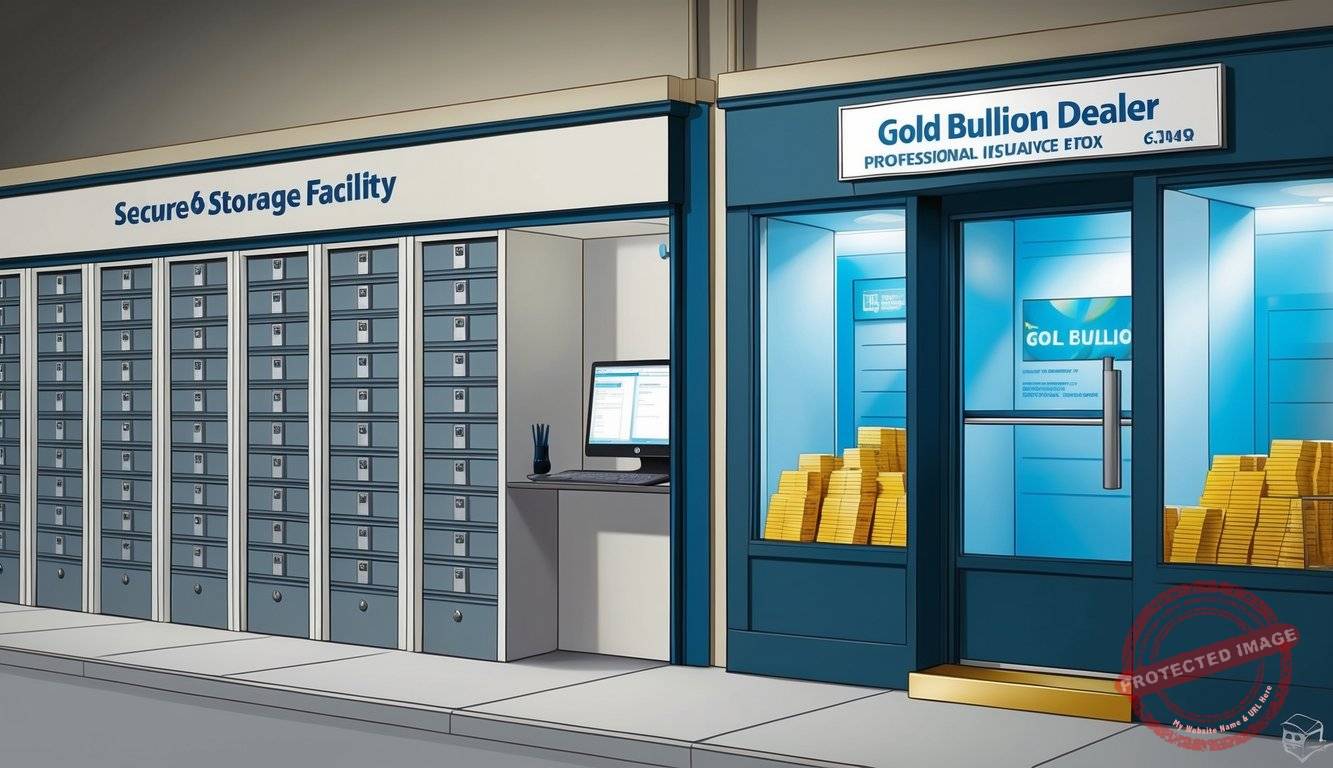
A secure storage facility with rows of safety deposit boxes, alongside a professional insurance agent's office, and a gold bullion dealer's storefront

When converting an IRA to physical gold, proper storage and insurance are critical requirements. The IRS has strict rules about where and how your precious metals must be kept to maintain tax advantages.

Selecting an IRS-Approved Depository

The IRS requires that gold in an IRA be stored in an approved depository – not in your home or personal safe. These facilities are specially designed to protect valuable assets. Common IRS-approved depositories include:

  • Delaware Depository Service Company
  • Brink’s Global Services
  • International Depository Services Group
  • HSBC Bank USA

Your gold IRA custodian will typically have partnerships with several depositories. When choosing a depository, consider:

  • Location – Some investors prefer facilities in specific regions or states
  • Security features – Look for advanced surveillance, armed guards, and insurance coverage
  • Segregated vs. commingled storage – Segregated storage keeps your specific metals separate from others but costs more

Understanding Insurance and Storage Fees

Storage fees are an ongoing expense when owning physical gold in an IRA. These fees typically range from 0.5% to 1% of your assets annually.

Most depositories charge based on:

  1. Value of metals stored
  2. Type of storage (segregated storage costs more than commingled)
  3. Amount of precious metals (by weight)

Insurance is included in most storage arrangements. Verify that your metals are fully insured against theft, damage, and loss. Read the policy details carefully to understand coverage limits.

Some custodians bundle these fees together, while others itemize them separately. Request a full fee schedule before selecting a provider to avoid surprises. Annual storage costs typically range from $100-$300 for moderate-sized accounts.

Investment Strategy and Portfolio Diversification

A person sits at a desk, surrounded by financial documents and a computer. They hold a gold coin in one hand, while pointing at a chart on the screen with the other

Adding physical gold to your retirement planning creates balance against market volatility. Smart investors recognize gold’s unique role in preserving wealth during economic uncertainty.

Incorporating Physical Gold into Your Portfolio

Financial experts typically recommend allocating 5-15% of your portfolio to physical gold. This percentage provides meaningful protection without overexposure to a single asset class.

Gold serves as a tangible asset that often moves independently from stocks and bonds. When markets fall, gold frequently maintains or increases its value.

Consider these allocation strategies:

  • Conservative approach: 5-7% for basic diversification
  • Moderate approach: 8-12% for enhanced protection
  • Aggressive approach: 13-15% for maximum hedge against inflation

The ideal allocation depends on your retirement timeline and risk tolerance. Investors closer to retirement may benefit from higher gold percentages.

Assessing Risks and Advantages

Gold offers significant advantages during economic instability. When currencies weaken or inflation rises, gold often preserves purchasing power.

Key benefits include:

  • Protection against currency devaluation
  • Hedge against inflation
  • Portfolio diversification
  • Physical ownership

However, investors should consider these drawbacks:

  • No income generation (dividends or interest)
  • Storage and insurance costs
  • Limited liquidity compared to stocks

The gold market can experience price fluctuations in the short term. Its true value emerges during extended economic downturns.

Tracking gold’s performance against your other investments helps determine if your allocation needs adjustment. Regular portfolio rebalancing maintains your desired risk level.

Maintaining and Managing Your Gold IRA

A person sitting at a desk, surrounded by financial documents and a computer, carefully transferring funds from an IRA account to physical gold

Once you’ve established your Gold IRA, proper maintenance ensures it continues to serve your financial goals. Regular oversight and planning for eventual distributions are critical aspects of gold IRA management.

Review and Rebalance Investment Choices

Gold prices fluctuate due to economic uncertainty, market conditions, and global events. Smart investors review their gold holdings at least annually to maintain their desired investment strategy.

Consider consulting with financial advisors who specialize in precious metals to evaluate your portfolio’s performance. These experts can provide insights about market trends that might affect your gold investments.

Many investors adjust their gold allocation as retirement approaches. Younger investors might maintain higher percentages of gold, while those nearing retirement may rebalance toward more diverse assets.

Create a simple spreadsheet to track:

  • Current gold prices
  • Percentage of portfolio in gold
  • Annual performance
  • Comparison to other investment types

This tracking helps identify when rebalancing might be necessary to maintain your risk tolerance and financial goals.

Handling Distribution and Liquidation

Understanding the rules for Gold IRA distributions helps avoid tax penalties. After age 59½, you can take distributions without early withdrawal penalties, but you’ll still owe income tax on the distributions.

Required Minimum Distributions (RMDs) begin at age 73, requiring you to withdraw a minimum amount annually. With a Gold IRA, you have two main options:

  1. Physical possession: Take actual delivery of gold coins or bars (taxable event)
  2. Liquidation: Convert gold to cash before distribution (provides better liquidity)

Plan your distribution strategy early. Some investors gradually liquidate portions of their gold holdings in favorable market conditions.

When considering liquidation, timing matters. Gold’s value often increases during periods of currency devaluation or economic uncertainty, potentially making these optimal times to convert gold to cash.

Frequently Asked Questions

A person at a desk, surrounded by paperwork and a computer, researching how to convert IRA to physical gold

Converting an IRA to physical gold involves specific processes, regulations, and considerations that many investors need clarity on. These common questions address penalties, possession rules, investment differences, and costs.

What is the process of converting an IRA to gold without incurring penalties?

To convert an IRA to gold without penalties, investors must set up a self-directed IRA with a custodian that allows precious metals. This requires a direct rollover or trustee-to-trustee transfer to maintain tax-deferred status.

The IRS considers withdrawing funds and then using them to purchase gold as a distribution, which triggers taxes and potential penalties if done incorrectly. Working with a specialized gold IRA company simplifies the process.

Most custodians complete the transfer within 2-3 weeks. Investors must select IRS-approved gold products that meet purity requirements (99.5% for gold).

Can I physically possess the gold from my IRA?

No, IRS regulations prohibit taking physical possession of gold held in an IRA. Gold in a retirement account must be stored in an approved depository under the custodian’s oversight.

Taking physical possession constitutes a distribution, triggering taxes and a 10% early withdrawal penalty for those under 59½. The IRS requires a qualified trustee or custodian to maintain custody of the precious metals.

After reaching retirement age, investors can take distributions either in cash or by receiving the physical metals, at which point taxes will apply to the distribution.

What are the differences between a Gold IRA and owning physical gold?

A Gold IRA offers tax advantages as retirement savings grow tax-deferred or tax-free, depending on the account type. Physical gold owned outside an IRA provides immediate access but lacks these tax benefits.

Gold IRAs require approved storage facilities and custodian management, resulting in annual fees. Direct gold ownership allows for home storage but may require personal security solutions.

IRA-eligible gold must meet specific purity standards, while personal gold purchases can include any form of the metal, including jewelry or collectible coins that wouldn’t qualify for an IRA.

What are the advantages and disadvantages of investing in a Gold IRA?

Advantages include portfolio diversification against market volatility and inflation protection. Gold often moves counter to stock markets, providing balance during economic uncertainty.

The tax-advantaged status allows for potential growth without annual tax obligations. Gold serves as a tangible asset with intrinsic value that cannot default or go bankrupt.

Disadvantages include higher fees than traditional IRAs, no income generation unlike dividend stocks or bonds, and strict regulations on metal types and storage. Limited liquidity and additional costs for buying, selling, shipping, and insuring the metals may reduce overall returns.

Which company is best suited for rolling over an IRA to gold?

Top gold IRA companies include Augusta Precious Metals, Birch Gold Group, and Goldco, known for their transparency and customer service. The ideal company depends on individual needs and investment goals.

Look for companies with strong reputations verified through Better Business Bureau ratings and customer reviews. Established firms with educational resources and clear fee structures typically provide better service.

Avoid companies that use high-pressure sales tactics or promise unrealistic returns. The best providers offer comprehensive support throughout the rollover process and maintain relationships with reputable custodians and depositories.

How much are the fees associated with maintaining a gold IRA?

Gold IRAs typically require several fees: a one-time account setup fee ($50-$300), annual maintenance fees ($75-$300), and storage fees ($100-$300 annually) based on the value and type of storage selected.

Additional costs may include transaction fees when buying or selling metals, wire transfer fees, and insurance premiums. Some companies offer scaled fee structures based on account size or waive certain fees for larger investments.

Unlike traditional paper-asset IRAs, physical gold IRAs generally have higher overall costs due to the secure storage and insurance requirements. These fees can impact long-term returns and should be carefully evaluated before investing.

Best Gold IRA Picks in 2026

#1 Augusta Precious Metals

augusta-new-logo-scaled.png

Ideal for those who want personalized education before investing.

(our #1 recommendation)

#2 Noble Gold Investments

nb

Perfect for investors looking to diversify with gold and precious metals